Top Women Modernizing Smart Manufacturing Through Artificial Intelligence, Robotics, Automation, and Industry 4.0
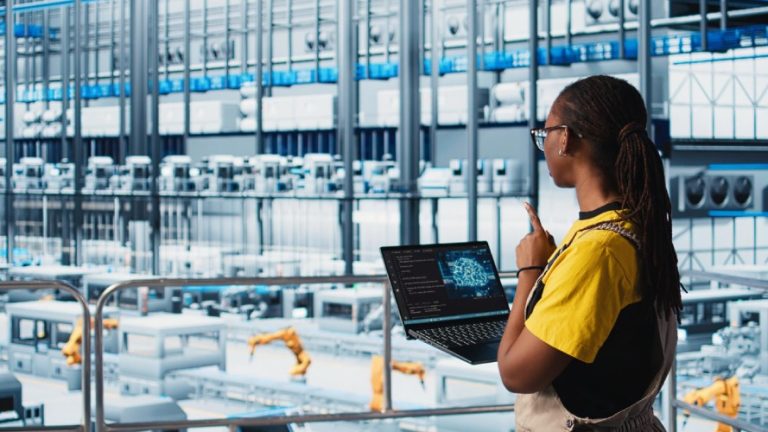
A modern factory floor has almost nothing in common with one from twenty years ago. Sensors track equipment in real time, robots handle repetitive assembly, and production schedules adjust themselves based on data rather than a fixed calendar. Industry calls this smart manufacturing, and it’s changed what running an industrial company actually requires: less pure operations experience, more fluency in AI, robotics, and connected systems.
Women have taken on a substantial share of the leadership driving that change, across engineering, technology, operations, and the executive suite. A few of them are worth knowing by name. 1.Lisa Su
AMD’s turnaround under Lisa Su is well documented in tech circles, but its manufacturing implications get less attention. High-performance chips are the backbone of modern industrial automation and AI systems – without progress in semiconductor design, most of what gets called “smart manufacturing” wouldn’t be possible in the first place. 2.Mary Barra
Running General Motors through the shift to electric vehicles and software-defined cars is not a small feat for a company GM’s size. Barra’s tenure is a working example of a legacy manufacturer actually changing course, rather than announcing a digital strategy and quietly continuing as before.
3.Ginni Rometty
IBM’s push into cloud computing and AI under Rometty’s leadership reshaped tools that plenty of manufacturers now depend on, even if the connection between an enterprise software company and a factory floor isn’t obvious at first glance.
4.Reshma Kewalramani
Vertex Pharmaceuticals sits outside the usual “smart manufacturing” conversation, which is exactly why Kewalramani’s work is worth including. Pharmaceutical production is one of the most tightly regulated, precision-dependent manufacturing environments there is, and her leadership has pushed technology deeper into that process.
5.Ellen Kullman
Kullman’s work at DuPont in material science is a reminder that manufacturing innovation doesn’t just happen on the assembly line. New materials – lighter, stronger, more sustainable – often make the next generation of manufacturing possible before a single robot gets involved.
6.Safra Catz
Oracle’s cloud and enterprise software infrastructure, built up under Catz, quietly underpins a lot of industrial digital transformation. It’s not glamorous work compared to a factory robot, but data infrastructure is what makes real-time production data actually usable.
7.Ilse Aigner
Aigner’s work sits closer to policy than to a single company, connected to broader efforts supporting technology and industrial development in Germany – a country whose manufacturing base still sets a benchmark for the rest of Europe. 8.Annette Clayton
Clayton’s career runs through senior operations and supply chain roles at major industrial companies, the kind of experience that comes only from years spent actually managing production, not from a technology background layered on top of it. That combination of deep operational knowledge plus fluency in digital tools is rarer than it should be.
Conclusion
Smart manufacturing is still a moving target, and the women leading parts of it are working across very different corners of the industry – chips, cars, enterprise software, pharmaceuticals, materials science, policy. What connects them is less a shared title than a shared willingness to push technology into an industry that has historically been slow to change.