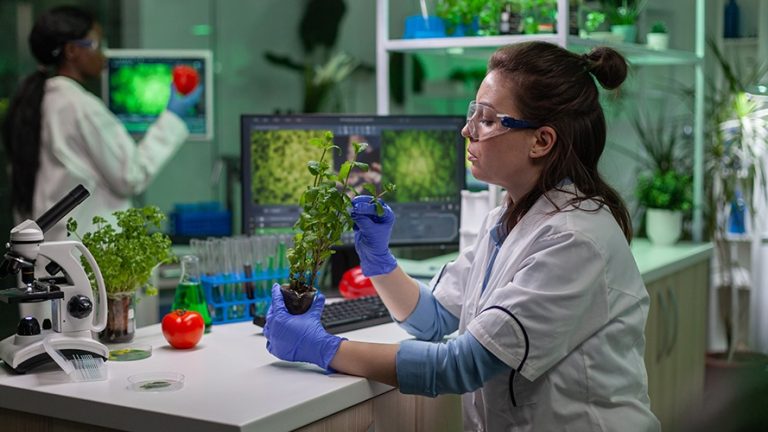
Women are building careers in biotechnology through research, healthcare, startups, agriculture, and technology, opening new paths for leadership and growth in the years ahead.
Biotechnology is advancing faster than most people ever imagined. People no longer see it as a field that only belongs in research labs. It now has a role in healthcare, medicine, farming, food, and climate work.
The most notable part of this change is the contribution of women. They work as scientists, doctors, founders, and leaders. Some are also turning their research ideas into startups. This is one of the most interesting parts of the sector. However, biotechnology offers many career choices. A person can work in research, healthcare, business, technology, or even start a company.
How Women are Contributing to Biotechnology
Women have been part of biotechnology for many years. It’s not like they have joined the sector recently; they have been working for decades. What has changed in recent times is that their roles have become wider. If you look, you will notice that hundreds of women work in research linked to medicines, vaccines, disease testing, genetics, farming, and food.
A lot of them are shining in their leadership roles. They are managing research teams, running companies, teaching at universities, and helping bring new products to the market. This matters since a good idea doesn’t become a useful product overnight. It takes research, testing, money, planning, and a strong team.
A scientist may understand the research. A business leader may know how to sell the product. A technology expert may build the digital side. The best part is that all these skills can work together.
Women are also bringing more attention to areas such as women’s health, pregnancy care, fertility, nutrition, and personal healthcare. These areas were mostly ignored previously. Today, women have been highlighting many problems that require better solutions.
However, funding remains a concern. A 2024 report from the UK BioIndustry Association found that women held 18% of biotech CEO roles and received 8% of the capital raised. At the early stage, women CEOs accounted for 25% of companies and 32% of capital raised.
These figures show that women can attract funding, but raising larger amounts can still be difficult. Better access to investors and strong support networks could help more women grow their companies.
Career Paths and Future Opportunities for Women
If you look at biotechnology as a career path, there are several ways to enter the field. Someone with a science degree can start her career in a lab. After gaining some years of relevant experience, they can move into medical research, clinical work, quality checks, or research management.
Another part is that not every job needs to happen inside a lab. If you are someone who enjoys business, you can work in sales, product work, consulting, or business development. Now, if you have technology knowledge as a bonus, you can enter areas like AI, health technology, and bioinformatics.
Women can even become entrepreneurs. Though this is not an easy path, it’s a feasible one. Biotech research can take years, and building a product can cost a lot. Still, grants, incubators, colleges, research centers, and government programs can help new founders.
AI could also open new doors. Scientists generally deal with a massive amount of data, and that’s where AI can help them. AI tools can study this information and speed up some parts of research. This means there could be more jobs for people who understand both biology and technology.
Agriculture is another area to closely watch out for. Biotechnology can help create better crops, improve food production, and deal with farming problems. Women with backgrounds in biology, agriculture, food science, or business could find new roles here.
Climate work could create more opportunities too. Companies are looking at biological ways to make materials, chemicals, and other products. This could create jobs for scientists, engineers, business experts, and founders.
Mentorship will also matter. A young woman entering biotech can learn a lot from someone who has already worked through research, funding, leadership, and business challenges.
Final Thoughts
The future of women in biotechnology looks promising. The field needs scientists, founders, managers, technology experts, and business leaders. Women are already working in research, healthcare, farming, disease testing, and biotech startups. The next step is to help more women reach senior roles and build companies of their own.
If the sector receives better funding, good mentors, useful training, and supportive workplaces, the process will be smoother. Biotechnology will continue to grow, and women will play a more crucial role in the advancement with the right support. If the infrastructure is right, today’s young scientists and professionals could become tomorrow’s biotech founders and leaders.