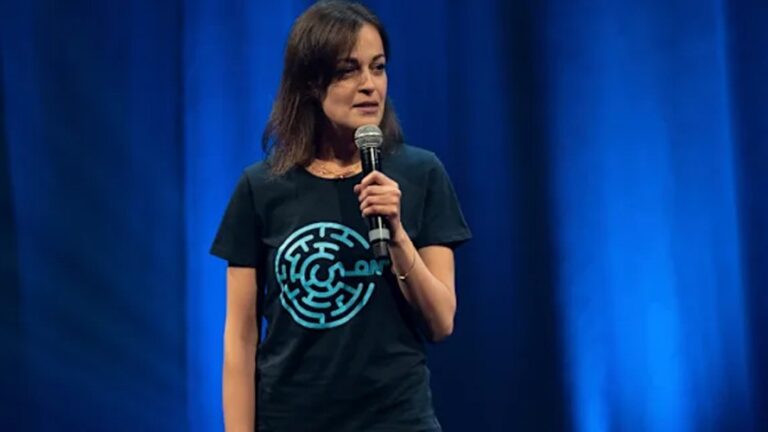
Heba Khamis, CEO and co-founder of Contactile, is helping robots develop a human-like sense of touch. Her work is making robotic hands more useful and opening new doors for automation.
Robots are more than mechanical agents. They can do a lot of things that were unthought of even a few years back. These machines can move heavy objects, work on factory floors, and even assist doctors. However, there are still a few things that make them different from human beings, and one of them is the sense of touch.
Humans can pick up a glass without breaking it or hold a small object without dropping it. Robots often struggle with such simple tasks.
Heba Khamis, the CEO and co-founder of Contactile, aims to change this. Her work mostly revolves around giving robots a sense of touch. Her technology helps machines understand how much pressure they apply when holding an object. It can also help them detect when something is about to slip from their grip.
How Heba Khamis is Growing Contactile
Contactile is an Australian technology startup founded in 2019. The company develops touch sensors that help robots handle objects with better control. Khamis started working on the technology in 2014, and her degrees in engineering and medical science from the University of Sydney helped her understand how the human hand responds to pressure and movement.
She focused mainly on how humans use their sense of touch. She wanted to understand how fingers detect pressure, movement, and changes when they come into contact with different objects. She then used this knowledge to develop similar abilities for robots.
Khamis co-founded Contactile with Benjamin Xia and Stephen Redmond. However, turning research into a business was not an easy task. The company needed funding, industry support, and customers who could use its technology.
The company has gained attention for its work in robotics. In 2026, it won the Robotics Australia Group’s Excellence in Robotics Awards in the Industrial Robotics category.It also won the PropelAir 2.0 competition, organized by ARM Hub in collaboration with MassRobotics. These achievements have helped Contactile build its name in the robotics industry.
How She Gave Robots the Ability to Feel Objects
A robot can see an object clearly through a camera, but that doesn’t mean it can hold that item safely. A camera view doesn’t tell it whether the material is slippery or if the item is fragile. Therefore, the amount of force it should apply to pick it up is hard to decide. This is where Contactile’s technology makes a difference.
The company has developed a sensor called PapillArray. This sensor works like a human fingertip. It detects pressure, movement, and vibration. It can also detect whether an object is slipping and determine how much force is needed to maintain a secure grip.
The sensor she has invested in is made of a soft silicone part. Additionally, it uses light-basedtechnology to collect information. When a robot touches an object, the sensor detects changes in pressure and movement and sends that information to the robot’s control system. It will help the robots to understand how much pressure they should apply to hold the object.
This doesn’t look like a revolutionary idea for sure, but it brings a solution to one of the most challenging issues. For example, if a robot is picking up a tomato, it should be careful. If it uses too much pressure, it will damage it, and too little pressure will make it fall. A touch sensor can help the robot find the right grip.
With the help of this same technology, robots can handle glass items without breaking them. They can pick up food products, medical tools, and other delicate objects as well without damaging them.
Making Robots More Human Through the Power of Touch
Heba Khamis is currently trying to solve a problem that may shape the future of robotics. Her journey shows how years of research can lead to technology that actually solves challenging issues. Through Contactile, she is helping machines gain an ability that humans use every day without even thinking about it.
As robots take on more tasks, the ability to feel objects will become just as important as the ability to see them. Khamis is helping make this possible. Her work could bring robots one step closer to working with the care and control of human hands.